




Stress can play havoc with our general health and reproductive wellness. And, stress can become a part of the experience when pregnancy doesn't proceed naturally. Delays pose a crucial question: Is stress a real contributing factor to infertility? Many studies are being done and are still going on.
Sometimes, infertility treatments become essential. If you are looking for infertility treatment in Siliguri or near you, consult a highly trusted infertility specialist. For many years, there has been discussion about the connection between stress and infertility.
An increasing body of evidence indicates that long-term stress may affect reproductive health in men and women in many ways. So, this makes pregnancy more challenging in a few cases, even if stress alone is generally not the direct reason.
Infertility Overview
In simple words, infertility is commonly defined as the inability to conceive or impregnate one’s female partner following a year of consistent, unprotected sexual activity. After six months of trying to conceive, infertility is usually diagnosed.
Numerous reasons can lead to infertility, such as:
- Ovulation abnormalities
- Poor sperm quality or low sperm count
- Low testosterone
- Polyendocrine Metabolic Ovarian Syndrome/ PMOS
- Endometriosis
- Fallopian tube blockage
- Unbalanced hormones
- Unexplained infertility
Millions of couples worldwide suffer from infertility, according to international health studies.
Know How Effects Does Stress Have on Human Body - Overview
We know that the body's normal reaction to difficult circumstances is what stress is. Stressful situations cause the body to release hormones like:
- Adrenaline, cortisol, and norepinephrine
Such hormones help us deal with acute threats, as they trigger our fight-or-flight response. However, long-term exposure to high levels of stress hormones can interfere with many body processes, including your reproductive ones, when stress becomes chronic.
The reproductive system depends on a careful balance between the following:
- The hypothalamus
- The pituitary gland
- The ovaries
- The testes
The hypothalamic-pituitary-gonadal (HPG) axis is a network that controls your reproductive hormones necessary for your fertility; the system may be disrupted by long-term stress.
Can Infertility Be Caused by Stress? The Brief Response
Well, as per available scientific data, stress is not likely to be the single factor causing you fertility concerns. However, chronic or severe stress can change sexual behavior, hormonal balance, and general reproductive health over time, causing negative changes in the body. This is what can lead to problems with fertility.
Crucially, infertility itself can lead to major stress, which can create a cycle that is challenging to break. As a result, the connection between stress and infertility is frequently characterized as delicate and reciprocal. For effective infertility treatment in Siliguri or in your city, see trusted doctors.
Findings of Research on Stress and Female Fertility
Ovulation and Stress
Many studies have looked into the potential impact of psychological stress on ovulation, and what they have found let’s explain. High amounts of stress may affect the release of reproductive hormones linked to ovulation (in females), according to research.
You should know that gonadotropin-releasing hormone (GnRH) aids in controlling the menstrual cycle, which may be disrupted by elevated/ high cortisol (stress hormone) levels.
When under a lot of stress, some women may observe:
- Irregular menstrual periods
- Ovulation delay
- Amenorrhea, or missed periods
Strong stresses include, for example:
- Significant life events
- Extreme emotional distress
- Overdoing physical training
- Stress and significant weight loss
Occasional daily stress, however, is less likely to totally interfere with ovulation, but it might cause late periods sometimes.
Research on Stress Biomarkers
Researchers have also looked into biochemical indicators of stress, and these are cortisol and alpha-amylase.According to a few studies, women who had greater levels of stress biomarkers had a marginally lower chance of becoming pregnant during their reproductive cycles.
Researchers highlight that stress is just one of several factors affecting fertility, mostly indirectly, but the evidence is still conflicting.
The Findings of Research on Stress and Male Fertility
Effect on the Quality of Sperm
Chronic stress may have an impact on several elements of male reproductive health, based on research, including:
- Concentration of sperm
- Motility of sperm
- Sperm morphology, or form
- Production of testosterone (Low-T issues)
Basically, stress hormones affect the hormonal processes that produce sperm. As per certain studies and medical work, men who reported higher levels of psychological stress had issues with semen parameters compared to men who reported lower stress issues.
Stress-Related Lifestyle Factors
Plus, stress can lead to actions or habits that have an indirect impact on fertility, like:
- Smoking
- Overindulgence in alcohol
- Bad sleeping patterns
- Unhealthy eating habits
- Decreased exercise
Many times, lifestyle choices complicate our lives, whether it’s reproductive health or cardiac health. If you feel you aren’t able to control stress, talking to a specialist like a general physician or psychiatrist will be of great help. Also, you can talk to the leading infertility doctor in Siliguri or near you for stress and fertility issues.

The Cycle - Stress Caused by Infertility
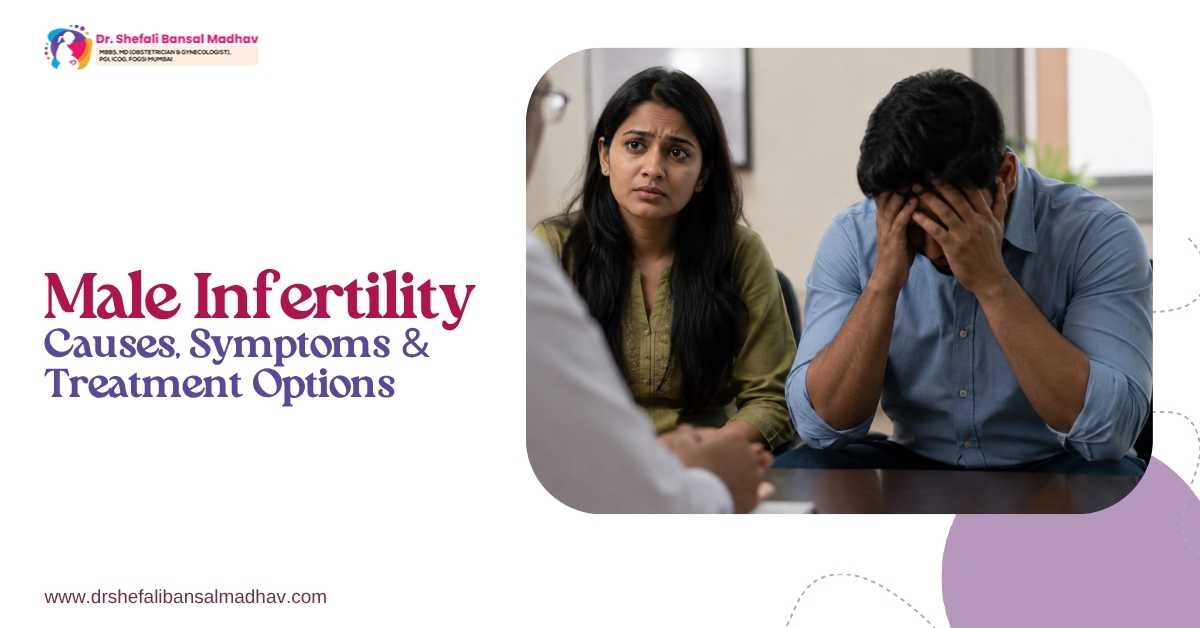
We have to understand that infertility itself can become a major source of mental suffering. And this is certainly a major discovery in science, as couples who are having trouble getting pregnant often experience:
- Fear
- Depression
- Anger
- Feelings of inadequacy or guilt
- Stress in relationships
- Social exclusion
Certain studies show the psychological toll of infertility is comparable to that of major health concerns. Mental health can be severely impacted by invasive therapies, repeated pregnancy setbacks, IVF failures, financial worries, and future uncertainty.
Since psychological support can enhance your overall quality of life throughout reproductive therapy, it is important to acknowledge this emotional influence.
Does Relaxation Help?
Though ubiquitous, the advice to just relax is ineffective alone. There is no proper scientific proof that relaxation on its own can help you overcome infertility, even if stress reduction works well for general health.
This message is crucial since it might induce unwarranted shame and self-blame if people suggest that someone is infertile only because they are under stress.
There are several possible causes for the medical condition known as infertility. Emotional stress shouldn't be seen as a personal shortcoming or the main cause of infertility; feel free to seek expert advice if you have been undergoing stress.
Rather, stress management ought to be viewed as a part of all-encompassing medical reproductive treatment.
Stress Reduction Ways That Could Promote Fertility
No doubt, stress reduction is of great help, as this can enhance your emotional resilience and general well-being. But we have to understand that it may not ensure pregnancy.
These evidence-based strategies could be useful.
Get a Professional Medical Evaluation
See a doctor or fertility specialist if you've been trying to get pregnant but haven't been successful.
Early fertility assessment can help determine possible medical issues if you have any and direct the right course of action.
Consider Counseling or Therapy
Mental health specialists can offer you coping mechanisms specific to stress associated with conception.
It has been shown that methods like cognitive behavioral therapy (CBT) can lessen mental distress and anxiety in infertile people.
Use Techniques for Relaxation and Mindfulness
Stress-reduction techniques could include:
- Practicing meditation
- Deep breathing techniques
- Gradual relaxation of the muscles
- Using guided imagery
- Programs that emphasize mindfulness
These methods can lessen your feelings of overload and enhance emotional balance with time.
Continue Living a Healthy Lifestyle
Both your general and reproductive health are supported by healthy lifestyle choices, so think about:
- Consuming a well-balanced diet full of nutritious grains, fruits, vegetables, and lean meats
- Regularly participating in moderate exercise
- Making good sleep a priority
- Reducing alcohol consumption
- Avoiding recreational medication use and smoking
- Keeping a healthy weight
Build a Support Network
Feelings of loneliness can be low if you make connections with encouraging friends, relatives, or infertility support organizations.
Many people find solace when they talk about their struggles with others who are going through similar things, as they can understand them easily.
Have Open Communication With Your Spouse
We shouldn’t take the importance of communication lightly, as relationships may be strained by infertility. Throughout the fertility process, regular communication about your feelings, expectations, and treatment choices can improve mutual understanding and partnership.
When Should You Seek Help?
- You and your partner have been trying to conceive for a year without success, and you are under 35.
- You have been trying without success for six months and are above thirty-five years old.
- Your menstrual cycles are highly irregular or nonexistent.
- You have a history of endometriosis, pelvic inflammatory illness, or repeated miscarriages.
- Your male partner has a history of testicular problems or is known to have reproductive challenges.
- Your female partner has PMOS.
Early evaluation is essential, and it can enhance treatment planning and reveal underlying problems.
Final Words
Based on current studies, persistent stress may have minor effects on reproductive function but is unlikely to directly cause infertility. It can affect one’s sexual behavior, lifestyle choices, hormone management, and emotional health, and finally affects fertility outcomes.
We should take a holistic approach to fertility. Throughout the conception process, you can look after your general health by seeking medical advice, putting emotional health first, and using constructive coping mechanisms.
Feel free to get advice from the top infertility specialists in Siliguri, such as Dr. Shefali Bansal Madhav.

