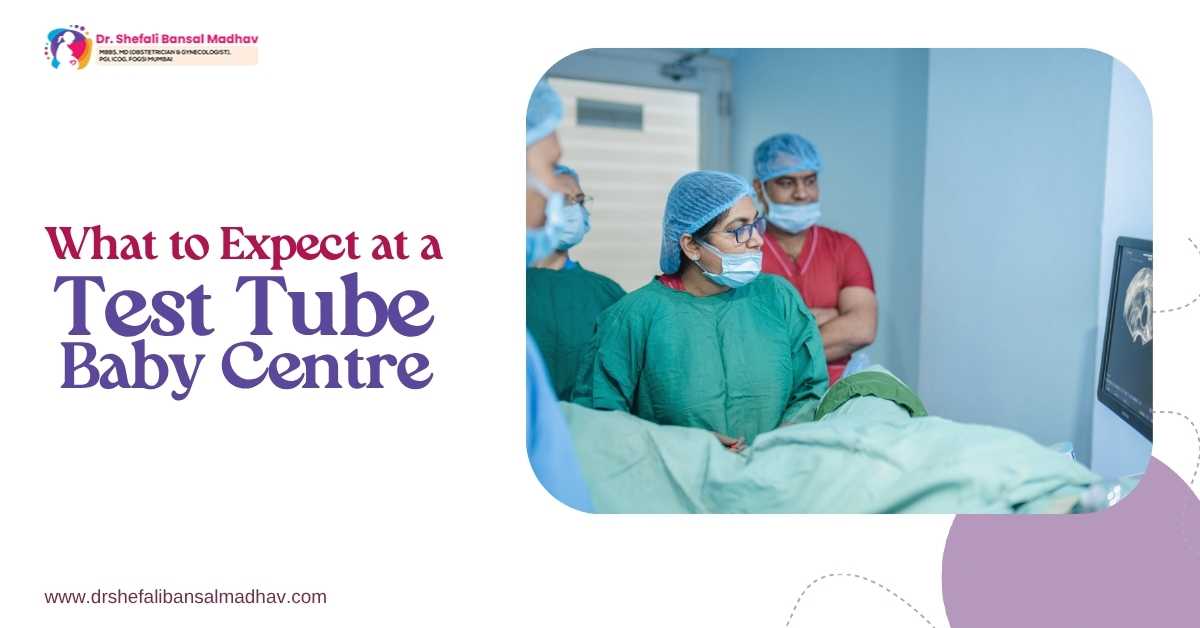






Some people experience emotional tiredness and doubts after months or years of trying to conceive. A test tube baby doctor in Siliguri or any location can provide a fresh viewpoint when pregnancy does not occur spontaneously.
It might be overwhelming to visit a fertility clinic for the first time for IVF consultations, fertility screening, et al. But knowing what goes on at a test-tube baby center might help you approach each step with more confidence and make the experience less confusing.
For individuals and couples with infertility issues, a test-tube baby center, also referred to as an IVF center or fertility clinic, offers complete diagnostic services and assisted reproductive treatments. This convenience supports patients in navigating the various phases of reproductive care without hassles.
A Test Tube Baby Center Overview
A test tube baby center is a specialized medical facility that assists people/ couples in addressing infertility issues and exploring or understanding their conception choices. In vitro fertilization (IVF), intrauterine insemination (IUI), fertility preservation, and other reproductive procedures are among the therapies they offer.
IVF involves removing eggs from the ovaries and fertilizing them with sperm in a lab (in a petri dish). A suitable embryo may be inserted into the womb once the resultant embryos are observed. Fertilization and the early stages of embryonic development occur in tightly regulated laboratory settings.
Your Initial Consultation for Fertility
Understanding your fertility history and talking about your concerns are often the main goals of your initial consultation with your fertility doctor. The doctor might inquire about the duration you've been trying to conceive, if you've been pregnant before, and whether either partner has any pertinent medical conditions.
Menstrual cycles, prior operations, medications, and reproductive health may be part of the discussion with your doctor. Male patients may be asked about their past fertility tests, lifestyle choices, and medical history. You might receive comprehensive advice and support at the best test tube baby centre in Siliguri City if you are planning.
What You Can Expect:
· A thorough examination of your reproductive and medical history.
· An explanation of potential infertility causes.
· Suggestions for suitable diagnostic procedures.
· An overview of the many therapy possibilities.
Prepare questions you need to ask, and bring test findings, prescription information, and prior medical records.
Tests for Fertility and Diagnostic Research
A fertility professional must understand the potential causes of infertility before suggesting treatment. Each person needs a different set of examinations.
Common fertility evaluations include:
Hormonal blood tests: These can be used to measure ovarian function and reproductive hormones, such as anti-Müllerian hormone (AMH), which can be used to measure ovarian reserve. But it cannot predict the likelihood of pregnancy on its own.
Ultrasound examination: The uterus, ovaries, and growing ovarian follicles can be evaluated using a pelvic or transvaginal ultrasound.
Semen analysis: To detect potential male-factor reproductive problems, this test under medical supervision assesses sperm concentration, motility, and morphology.
Assessment of the uterus and tubes: The doctor may suggest tests to look at the uterus or find out if the fallopian tubes are open, depending on the patient's medical history.
Each study should be explained by your fertility specialist, along with how the findings might affect your course of therapy.
Understanding Your Customized Fertility Treatment Plan
Now your doctor discusses the diagnosis and suggests appropriate treatment options after all your test results are available.
These could include lifestyle counseling, ovulation induction, IUI, IVF, or intracytoplasmic sperm injection (ICSI - injecting a single sperm straight into an egg, depending on your situation).
IVF isn't always the best option for couples who have been diagnosed with infertility. The underlying reproductive problem, age, past treatment results, and other medical factors all play a role in the decision.
What Takes Place During IVF Treatment?
Your specialist will check each phase of the treatment cycle if IVF is advised.
Stage 1: Ovarian Stimulation
Hormonal/ fertility drugs provided by the doctor help encourage the development of numerous follicles in your ovaries. Using ultrasound scans and, where necessary, blood tests, the medical staff keeps an eye on your reaction. Your development may determine how much medication you need to take.
Step 2: Retrieving the Egg
When the follicles are ready, a medical procedure, typically including sedation or anesthesia, is used to retrieve the eggs. The process is described in advance, along with recuperation guidelines.
Stage 3: Fertilization in the Laboratory
Based on the clinical suggestion, either conventional IVF or ICSI is used to fertilize the retrieved eggs with sperm in the IVF lab. Under carefully regulated laboratory conditions, embryologists keep an eye on fertilization and embryonic development.
Stage 4: Transfer of Embryos
Once an embryo reaches the proper stage of development, it can be placed into the uterus carefully by the specialist. A fine catheter is typically used for the procedure, and there’s no need for general anesthesia.
Additional embryos may be frozen under appropriate conditions for potential future use, subject to applicable laws and medical recommendations.
Stage 5: Test for Pregnancy Confirmation
Next, based on the treatment procedure, your fertility clinic will prescribe a time for a blood test, which is often between 9 and 14 days after embryo transfer.
Individual conditions determine the outcome, and some patients may require additional counsel before you make any decision.
How Much Does a Test Tube Baby Center's Treatment Cost?
The clinic, location, medical needs, and kind of reproductive procedure matter in determining IVF treatment costs. Consultation costs, diagnostic tests, fertility drugs, egg retrieval, lab work, embryo transfer, and embryo freezing or storage may be included in the overall cost in India.
When you compare IVF facilities in a specific location/ clinic, ask for a written estimate that details what is covered and what can cost more. Find out if the quoted fee includes follow-up appointments, medication, monitoring, and anesthesia.
Final Words
You can best learn about your fertility, explore your evidence-based treatment choices, and get individualized advice by going to a highly trusted test tube baby center. From the first consultation and diagnostic testing to IVF operations and emotional support, doctors explain all steps in simple words.
For the best test tube baby doctor in Siliguri, you might book an appointment with Dr. Shefali Bansal Madhav, a reputed IVF doctor in the city.
FAQs:
1. When should a couple visit a test tube baby centre?
If the female partner is under 35, a fertility evaluation is typically advised after 12 months of consistent, unprotected sexual activity without pregnancy; if she is 35 or older, it is advised after six months.
If the male partner has sperm, ejaculation, or erection-related issues and the couple has no successful conception after trying for 12 months, seeking fertility advice is wise.
2. Is IVF treatment painful?
Different people have different experiences; injections of hormones may result in bruising, bloating, or mild discomfort. While embryo transfer is typically a fairly simple process, egg removal is mostly carried out under sedation or anesthesia.
3. What is the duration of the IVF procedure?
From the beginning of ovarian stimulation until embryo transfer and the first pregnancy test, an IVF cycle often lasts four to six weeks.
4. Is a test tube baby centre suitable for male infertility?
Fertility centers evaluate the reproductive health of both men and women, so men should visit and get expert guidance.
5. Is pregnancy guaranteed by IVF?
No, IVF or any fertility treatment cannot promise pregnancy.